
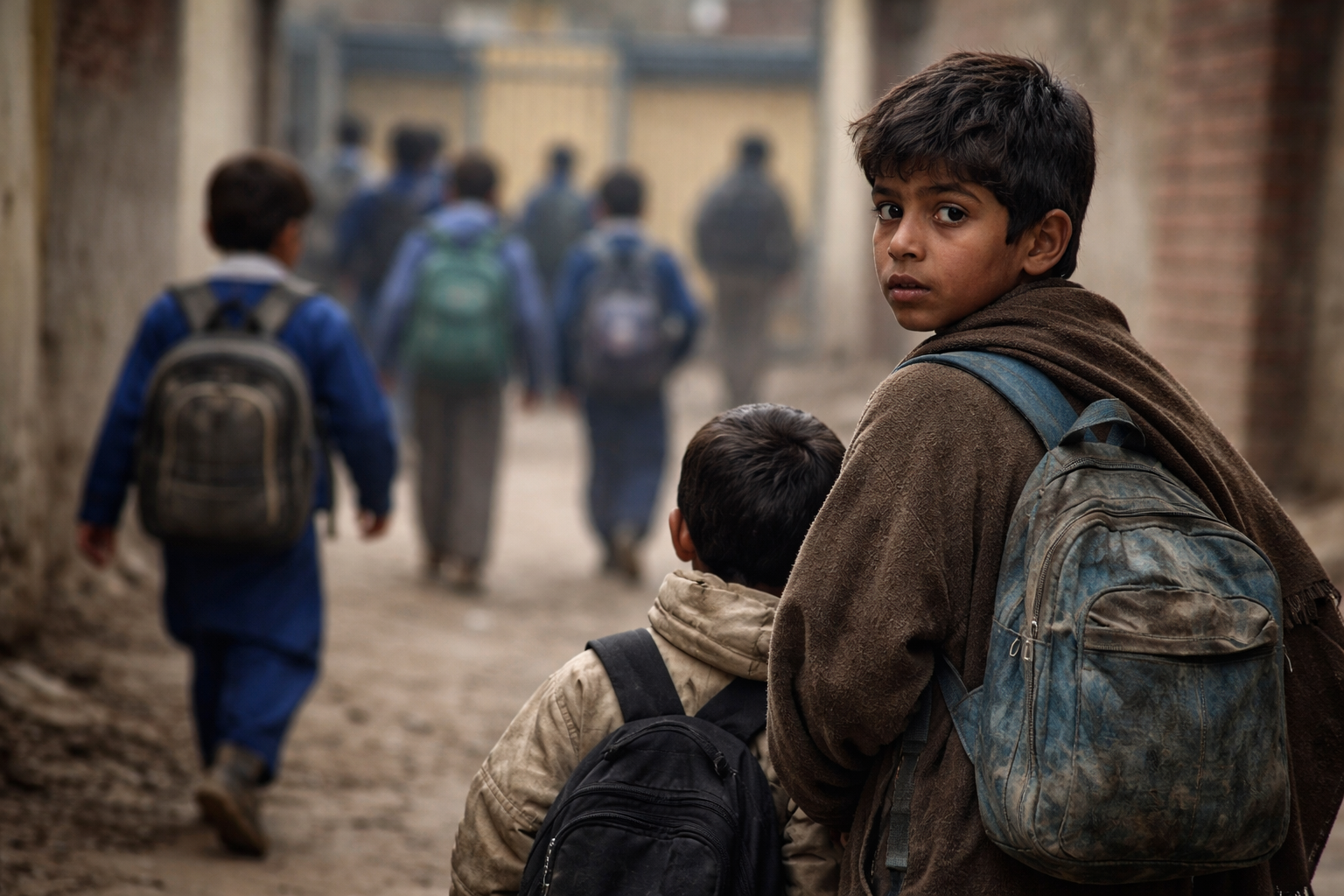
When schools reopen after winter break, attendance sheets may look like ordinary records, but behind them lies a quiet crisis. For many children in Pakistan, the return to school is not guaranteed. A break in routine can quickly become a break in education itself. What begins as a few extra days at home often turns into weeks of absence, and in too many cases, a child never comes back at all. This does not happen because education suddenly loses value. It happens because poverty is always waiting for an opportunity to interrupt it.
Winter break can expose how fragile a child’s connection to school really is. Families already struggling with rising expenses may be unable to afford transportation, notebooks, uniforms, or overdue school payments when classes resume. Some children are pulled into labor during the break to help support the household, and once they begin earning, even in small amounts, returning to the classroom can feel financially impossible. Others fall behind so quickly that embarrassment keeps them away. A child who misses the first few days back is often seen as careless or undisciplined, when in reality that absence may reflect forces far beyond the child’s control. The problem is not laziness. The problem is how easily poverty turns a temporary pause into permanent educational loss.
This pattern deserves far more attention than it receives. We often talk about school enrollment as if it guarantees school participation, but enrollment means very little if children cannot sustain attendance after moments of disruption. The period immediately after winter break should be treated as a high-risk point in the academic year. Schools should actively track which students fail to return within the first week and contact families before absence becomes long-term withdrawal. Communities can help through small but targeted support such as transport assistance, school supply distributions, or emergency funds for families under financial stress. Even simple interventions, if timed correctly, can protect a child’s chance to continue learning.
If we truly want to reduce dropout rates, we must stop viewing return to school as automatic. For many children, coming back after winter break is not a routine step. It is a hurdle. It is a negotiation between hope and hardship. It is often the moment when education either survives another season or quietly slips away. A child should not lose access to learning because one school break gave poverty enough time to pull them away. The return to school matters just as much as the first day itself, and until we recognize that, too many children will remain absent not just from classrooms, but from the futures they deserve.